
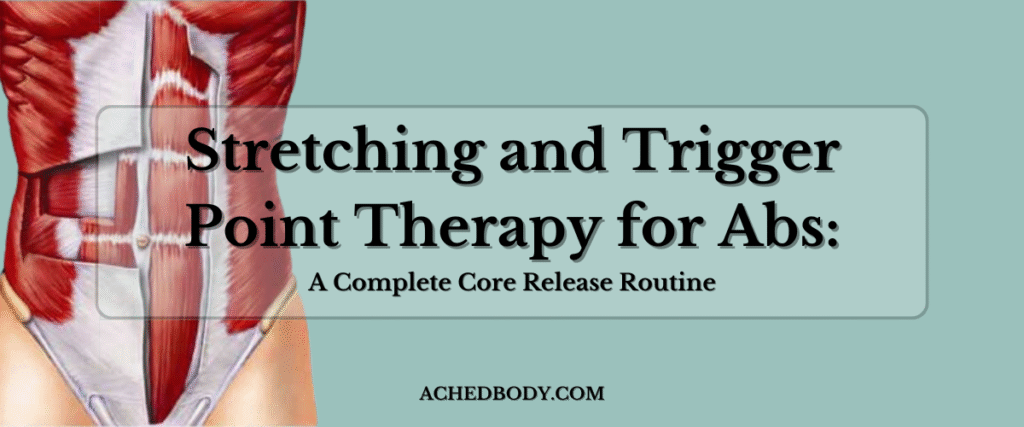
The main ab muscles are some of the most overlooked muscles when it comes to myofascial release.
Most people that stretch, even every once in a while, will often overlook this area, thinking it is not as important as other body parts.
This article explains:
- How stretching and trigger point therapy work together
- How I combine them for a healthy body
- How to build a simple routine for long-term health
Why Care About Your Core In The First Place
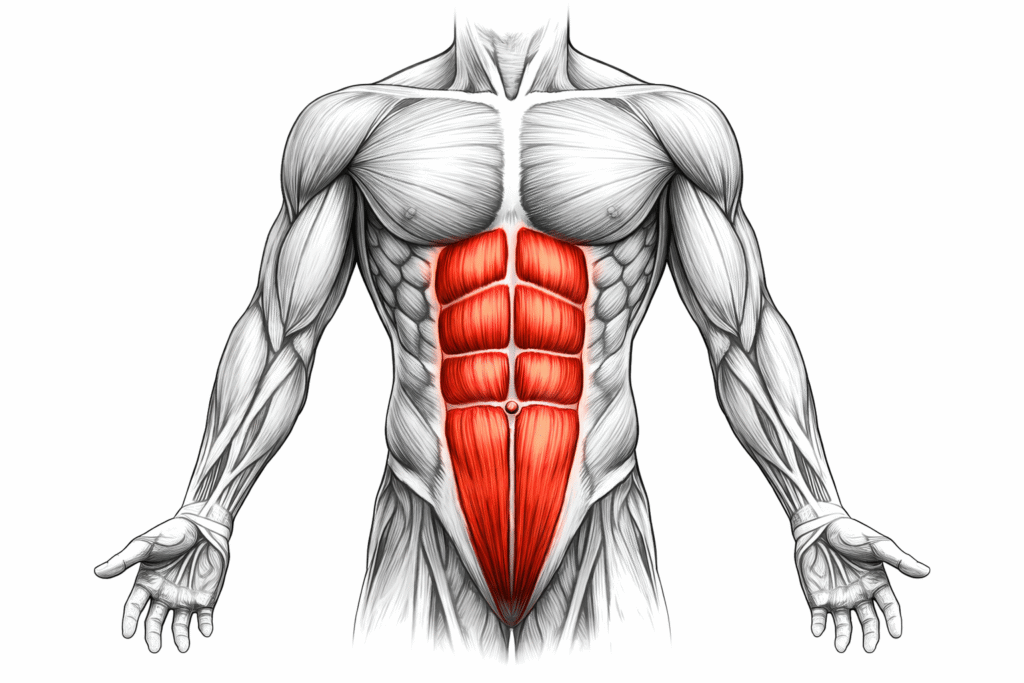
I won’t pretend like people can’t go their entire life without relieving tension or building strength throughout their core.
Though, at the same time, I would prefer to have a lower chance of issues like herniations, pulled back muscles, and shallow breathing as I get older.
And that’s what these stretches and trigger point techniques address.
Adding in some strength work will also make sure that you are prepared for anything and everything that comes your way.
Why the Core Responds Best to a Combined Approach
Stretching exercises for the core help lengthen shortened muscles, but they cannot always resolve deeper tissue irritation.
Trigger point therapy, on the other hand, reduces internal resistance within the muscle but does not fully restore mobility on its own. When these two methods are combined, the results are far more consistent and longer-lasting.
This is why many people find that ab stretching suddenly feels easier and more effective once trigger points have been addressed.
Step One: Release Trigger Points in the Abdominal Muscles
Read the detailed breakdown here!
The first step is reducing internal tension within the abdominal muscles. Trigger point therapy targets sensitive, restricted areas in the muscle tissue that limit normal movement and circulation.
But be careful! This is an extremely sensitive area of the body (duh… organs)
Use a large ball to apply gentle pressure to relax the tissue without forcing the stretch.
The key is breathing into it and not forcing too much pressure into the ball.
If you are new to this process, the article on trigger points in the abs explains where trigger points commonly form, what they feel like, and how to release them safely.
Step Two: Stretching The Abs
Once trigger points are released, stretching becomes way easier.
At this stage, the goal is not to push range of motion but to allow the abdominal muscles to lengthen naturally as tension decreases.
There aren’t a ton of ways to stretch this area, but my favorites include upward dog, Wheel stretch, and standing ab extensions but I have so much more in my ab stretching article!
Learn more about how to do them in my ab stretching guide.
Building a Simple Daily Core Stretch and Release Routine
A complete routine does not need to be long or complicated.
Most days, I only need 10-20 minutes to get the major problems I am working through.
I always start with light trigger point work in the areas that need the most attention and follow that up with direct stretches.
My problem areas tend to be in my legs, but once or twice a week I will make sure I hit the less common areas like my core and chest to make sure they get some love too!
How Often Should You Stretch and Release the Abs?
Consistency matters more than intensity. Light daily sessions are generally more effective than occasional aggressive work.
Especially in the abdominal region which is way more sensitive compared to other parts of the body.
For most people, brief trigger point therapy followed by gentle core stretches can be done once per day, with additional sessions added during periods of increased training or stress if desired.
Listening to how your body responds is key. The goal is to feel more open, relaxed, and mobile afterward — never sore or fatigued.
How This Fits Into Total Core Health
A healthy core is mobile and doesn’t restrict your movement or breathing ability.
A healthy core is also strong to support posture, so fitting in regular strength training for your core is just as important. There are a lot of resources online for core strength work so I won’t harp on that too much.
For a broader perspective on how stretching supports full-body mobility, the Ultimate Stretch Guide provides additional insight into building flexibility safely.
For deeper tissue work beyond the abs, the Ultimate Guide to Trigger Point Therapy is my guide for all body parts!
See you next time!
-Nick