
This article is dedicated to giving your core a break from the constant tension it is put through.
In it, you’ll learn
- Why this matters in the first place
- How to trigger point your abdominal muscles
- And what you can do to maintain a healthy core
Let’s do it!
Can Abdominal Muscles Develop Trigger Points?
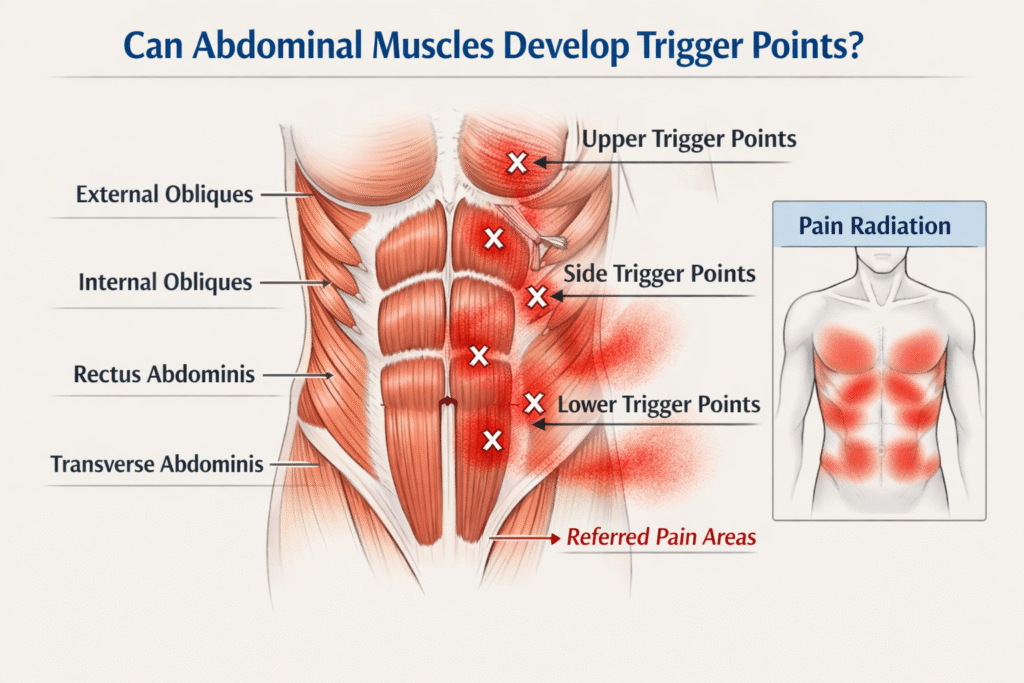
Unfortunately, it’s unavoidable. Every muscle will develop trigger points throughout your life.
But your abdominal muscles are almost always active, not just during workouts.
They stabilize the spine, assist breathing, and brace during movement and stress. Over time, constant low-level contraction can overload the tissue.
Trigger points form when the abs are overused, chronically shortened, or never allowed to fully relax.
Long periods of sitting, excessive crunch-based workouts, guarding due to back pain, and even emotional stress can all contribute. Because the abs are rarely massaged or directly addressed, trigger points can persist unnoticed for years.
Why Does it Even Matter If You Feel Fine Right Now?
Abdominal trigger points don’t always cause obvious pain, which is why it’s easy to ignore them.
The issue is that low-level dysfunction rarely stays isolated. Small restrictions in the abdominal muscles can subtly alter breathing, posture, and spinal movement, and those changes tend to compound over time.
What starts as mild abdominal tightness can gradually shift stress into the lower back, hips, and pelvic region, increasing wear on the body year after year.
Fixing trigger points early/now helps preserve normal movement patterns, reduces accumulated strain, and protects core function as you age.
Common Areas Where Abdominal Trigger Points Form
The four main muscles that will give you abdominal pain are:
Rectus Abdominis
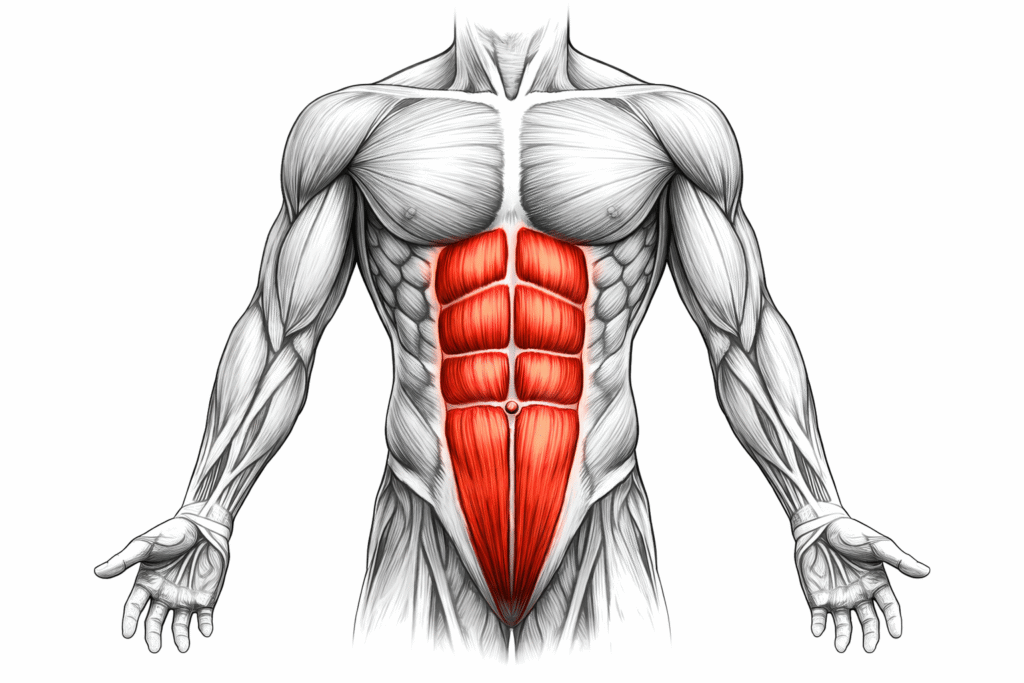
This is an extremely sensitive area and the pain can present in many locations making it very tricky to deal with.
When the Rectus abdominis is to blame, you can have pain along the muscle, just to the outside of your lower rectus abdominal muscle or in your back along the ribs or down by your hips!
There are a lot of options but read the next section to see how I get rid of this pain without causing internal issues!
Transverse Abdominis
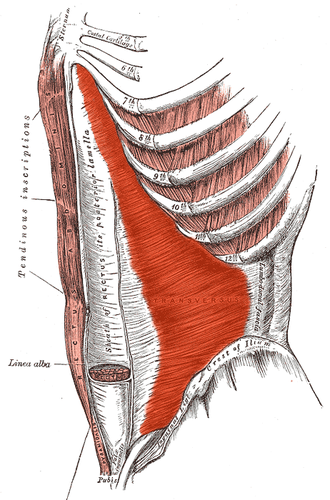
This is the deepest layer of abdominal muscle and it wraps around your entire torso.
Unfortunately, it is basically impossible to locate trigger points through normal rolling or therapist palpation so keeping it in regular rotation will help prevent future issues in your core and lower back!
Read more below to see how I target this muscle!
Internal And External Oblique Muscles
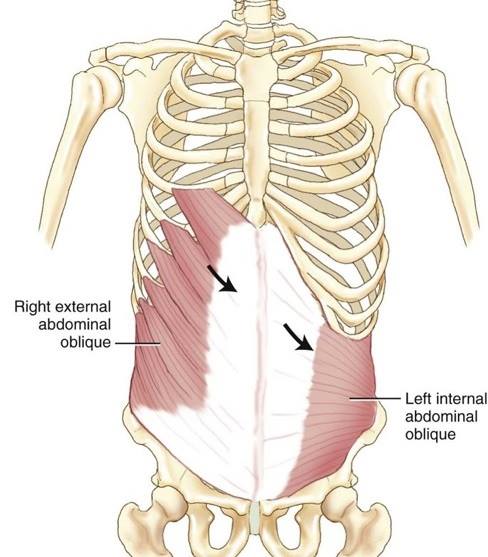
Targeting these muscles is similar to targeting the rectus abdominis muscle.
They also have similar pain patterns so if you have pain in your upper abdomen along your rib cage or to the side of your lower core muscles as shown in this diagram…
Then you should give these muscles a look over. Find out how in the next section!
How to Release Abdominal Trigger Points Safely
Trigger point therapy for the abs should always be gentle and controlled. The goal is not to force pressure but to allow the tissue to soften gradually.
For all of these areas I use a large massage ball or a softball to lay on top of.
But I rarely put all of my weight down on the ball. These areas are super sensitive to pressure so moving slowly and propping yourself up with your arms and legs is essential.
All I do is shift up to an inch at a time along the muscle and take some deep breaths to expand the muscle into a stretched position while being trigger pointed.
Watch this video for a visual guide to what I do.
As you can see, going inch by inch to the target areas along the rib cage and outer core areas is a great place to start.
I also love the way it feels moving vertically along the rectus abdominis, but you can test it out for yourself!
NOTE: Do not exceed a 6-7 out of 10 in pain when doing this. That means you are using too much pressure and potentially damaging your muscle tissue and underlying organs. Please be careful!
Why Trigger Point Therapy Makes Ab Stretching More Effective
One of the biggest benefits of trigger point therapy is how dramatically it improves your ability to stretch the same area.
When trigger points are present, the muscle resists lengthening. Stretching simply pulls against irritated tissue, which isn’t helping anybody.
Releasing trigger points first allows the muscle fibers to slide more freely. This makes ab stretches feel smoother, less forced, and far more effective.
Learn all of the ways I stretch the core here!
Combining Trigger Point Therapy With a Full Core Routine
If you only strengthen your abdominal muscles, your body will lose range of motion and the ability to adapt to your movement.
It is definitely important to have core strength but it is equally important to build pliable muscles that can use full range of motion and add to your life.
If that sounds good to you, the whole body works like this too!
You can learn how to trigger point every body part with my ultimate guide to trigger point therapy and when you’re ready to stretch, my Ultimate Guide to Stretching is waiting too!
Good luck!
-Nick